

Bleeding a radiator is the process of releasing trapped air out of a radiator, and should be carried out as part of maintaining your heating system.
In short, bleeding a radiator is important to allow your central heating system to work as efficiently as possible and so your radiators remain at peak performance.
Without bleeding your radiators, the ‘trapped air stops warm water circulating around your radiator’, causing a variety of signs that your radiators aren’t performing efficiently, such as cold spots.
If your radiators are not working efficiently, then, this can cause your heating bills to rise significantly by virtue of the fact it will take longer to heat your house. Not only is this costly, but also the increased energy usage that it will take to continue heating your house with inefficient radiators is damaging to the environment.
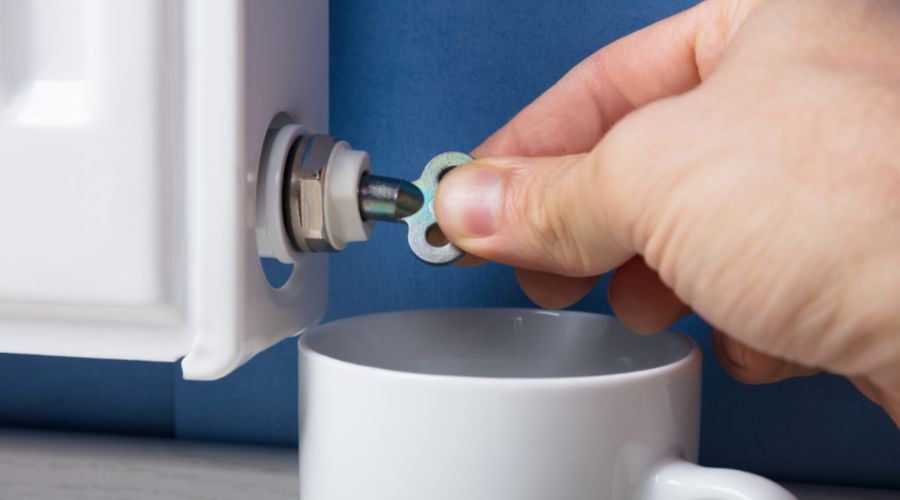
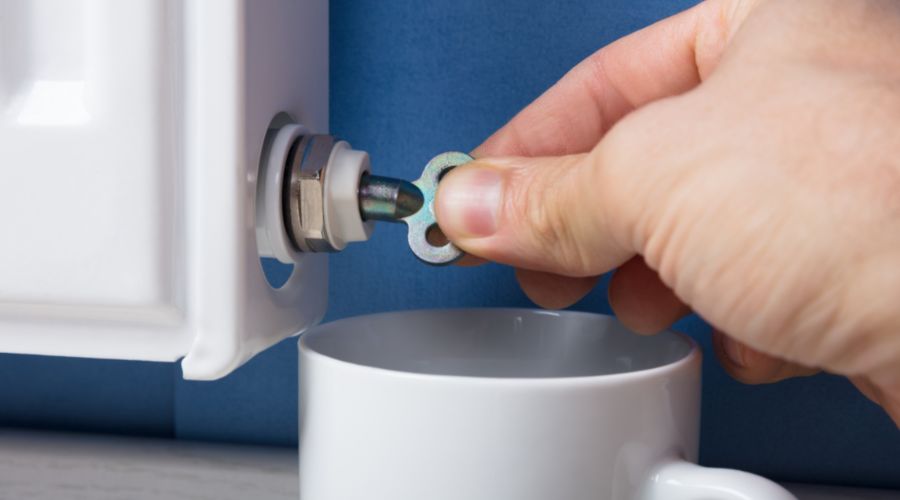
It’s very simple to bleed a radiator, but it’s important that you ensure all of your radiators are off and cold before you attempt the process. All you need is a radiator key and an old cloth or pot to collect the water that you drain out of the radiator whilst bleeding it.
Generally speaking, it’s recommended that you bleed a radiator a minimum of once a year, even if they appear to be in normal working order. That said, you should be aware of the signs to help you to recognise when to bleed your radiators.
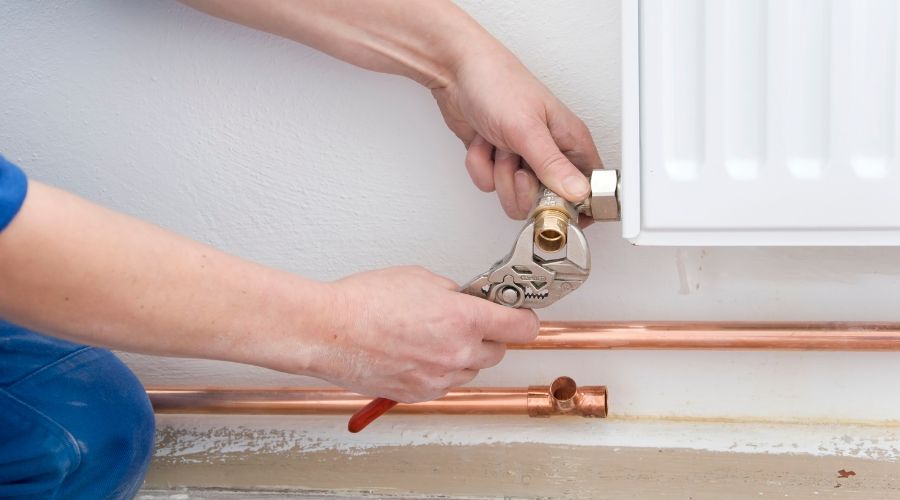
Signs You Should Bleed Your Radiators
If you’re unsure whether your radiators are in need of being bled, there are a few signs that are a good indicator.
Signs you should bleed a radiator include, but are not limited to:
- Your radiators are taking longer than usual to heat up
- Your radiators have cold patches
- You’re hearing unusual noises
- Mildew growth
1. Your Radiators Are Taking Longer Than Usual To Heat Up
A sign that you need to bleed your radiators is if your radiators are taking longer than usual to heat up.
If your house feels colder than usual and you notice that the radiators still feel to the touch after your boiler has been on for a while, then this is a clear indication that you should bleed your radiators.
When there is air trapped within your radiator, you might even feel like your house is never warm enough, which will in turn encourage you to keep your heating on for longer periods of time.
2. Your Radiators Have Cold Patches
Another sign to look out for is if your radiators have cold patches, as ‘the usual culprit is air trapped in the heating system’.
To determine whether your radiators have cold patches, you will need to feel them whilst they are on. Ask yourself whether the temperature feels the same all along the radiator.
If they feel colder at the top, but warmer at the bottom, then this is a sure sign that they could need bleeding to ensure that the radiator is a consistent temperature.
Alternatively, the entire radiator might be cold, which clearly indicates that there might be a problem with your boiler.
3. You’re Hearing Unusual Noises
If you’re hearing unusual noises whilst your radiators are on then this could be a sign that you need to bleed your radiators.
It’s normal for your central heating system to make noises when it’s on, and you likely already know what it sounds like just from living in your home.
That said, odd noises to look out for include banging pipes as well as gurgling sounds in your radiators themselves.
That said, if bleeding your radiators doesn’t fix these problems, then this could be the result of another problem with your heating system. For any advice on your heating system, be sure to contact Towy Valley Heating today.
4. Mildew Growth
Last, but not least, a sign that you need to bleed your radiators is mildew growth. This comes down to the fact that unbalanced heat can result in condensation in your home.
If you begin to notice damp patches with the growth of mildew or mould, then this can indicate that your home is too cold and your heating isn’t working as it should be. As such, it’s good to bleed your radiators as a precaution.
Hopefully this article has helped you to understand why you should bleed radiators, as well as the signs to look out for to determine when they need to be bled.
Suppliers across the UK are required to deliver ECO from 2020, but we at Towy Valley Heating are proud to have been involved with the ECO scheme since it began. Contact us to find out more about the free heating measures we offer, and if you are eligible.
Written by Jemima Thomas for Towy Valley Heating.